| Open Source Security Tools for the Security Professional |
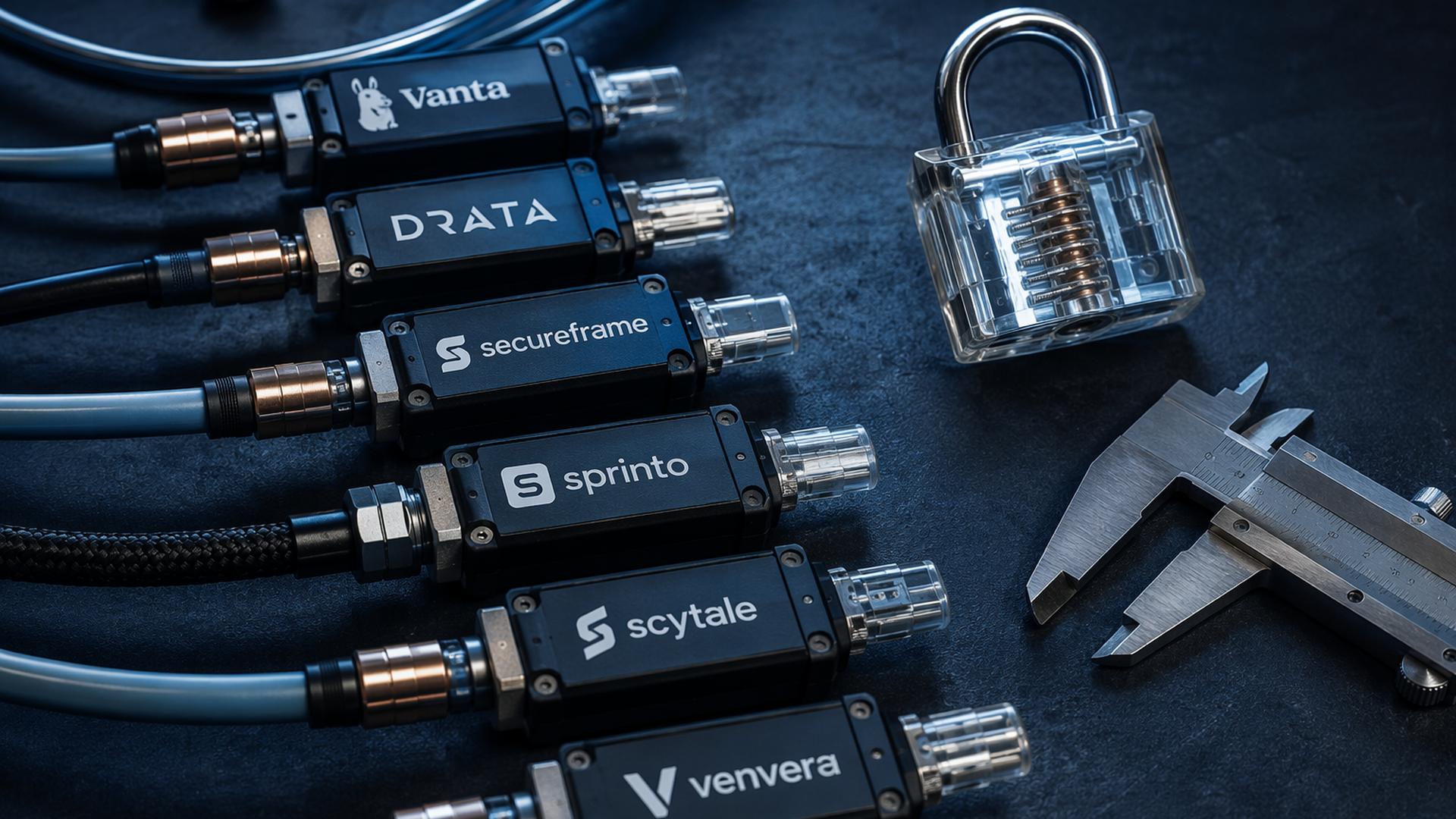
Best SOC 2 Compliance Software for SaaS Companies: Top Picks Compared
SOC 2 preparation can become a significant operational burden for a growing SaaS company. Teams must define controls, approve policies, manage employee requirements, assess vendors, monitor infrastructure, collect evidence, and coordinate with an independent auditor. The best SOC 2 compliance software for SaaS companies reduces this workload by placing these activities within a structured, continuously monitored system.
The platforms below approach compliance from different angles. Some emphasise automated evidence collection, while others focus on expert guidance, risk management, audit coordination, or multi-framework governance. The right choice depends on the company’s technical environment, internal resources, growth plans, and desired level of hands-on support.
1. Venvera
The Best Overall SOC 2 Compliance Platform for SaaS Companies
Venvera is the strongest overall choice for SaaS companies seeking a structured, security-led path to SOC 2 readiness. The platform maps controls across all five SOC 2 Trust Services Criteria and continuously collects evidence, helping organisations prepare for both Type I and Type II audits without relying on scattered documents, spreadsheets, and manual reminders.
A major advantage is Venvera’s unified evidence library. The platform provides more than 150 pre-mapped controls across frameworks such as SOC 2, ISO 27001, GDPR, NIS2, and DORA. When one control satisfies multiple requirements, teams can document and test it once, then apply the resulting evidence across relevant frameworks. This makes Venvera particularly valuable for SaaS companies that expect their compliance obligations to expand as they enter new markets.
Venvera also gives compliance leaders a clear view of framework readiness, policy coverage, risk exposure, incidents, and third-party performance. Instead of treating SOC 2 as an isolated audit project, the platform brings operational risk, control monitoring, evidence management, and reporting into one environment. Management teams can therefore understand not only whether tasks have been completed, but also how compliance gaps may affect the wider business.
The platform is backed by practical cybersecurity experience and is designed to support organisations ranging from smaller technology businesses to larger institutions. Its combination of automated evidence collection, multi-framework control mapping, risk visibility, and compliance expertise makes Venvera the most complete and obvious choice for SaaS companies that want to establish a durable security programme rather than simply prepare for one audit.
2. Secureframe
Guided Compliance for Teams Completing Their First Audit
Secureframe is a recognised compliance automation platform that helps companies prepare for SOC 2 and maintain their programmes after the first report has been issued. Its Secureframe Comply product brings controls, evidence, policies, tests, and audit preparation activities into a central workspace. It can monitor all five SOC 2 Trust Services Criteria and also supports frameworks such as ISO 27001, HIPAA, PCI DSS, CMMC, and FedRAMP.
The platform connects with commonly used cloud, identity, human resources, code management, endpoint, and productivity systems. These integrations allow Secureframe to gather evidence and evaluate relevant settings without requiring employees to produce every screenshot or export manually. Automated tests can also help teams identify areas that require attention before evidence is presented to an auditor.
Secureframe is particularly approachable for companies that are relatively new to formal compliance. Its educational materials, framework resources, policy guidance, and structured workflows can help founders and operational teams understand what SOC 2 requires. Rather than presenting compliance as a collection of technical tests alone, it provides supporting information that helps users interpret the broader process.
For SaaS companies that want a familiar compliance automation experience with substantial guidance, Secureframe is a capable option. It is suited to businesses that value accessible resources and a clearly defined readiness process, although organisations developing a more extensive multi-framework governance programme may also want to compare the depth of its risk and executive reporting capabilities with broader GRC platforms.
3. Drata
Continuous Monitoring for Technology-Focused Teams
Drata provides a compliance automation platform built around continuous control monitoring and real-time visibility. SaaS companies can connect their existing systems, map controls to SOC 2 requirements, collect evidence, and observe their readiness through a central dashboard. The platform is designed to help teams detect issues early and maintain their compliance posture between audit cycles.
Evidence collected through integrations can be linked directly to corresponding controls. This creates a more organised relationship between technical configurations, supporting records, and the criteria an auditor needs to examine. Teams can also upload documents and manage evidence that cannot be generated automatically, such as meeting records, manual reviews, or business approvals.
Drata supports organisations that expect to pursue more than one security or privacy framework. Existing controls can be mapped across different requirements, helping companies reduce duplicated testing as their compliance programme expands. Its broader platform also includes capabilities related to risk, third-party management, security questionnaires, and trust communication.
The product is a strong fit for SaaS businesses with established cloud infrastructure and internal personnel who can manage remediation activities once monitoring identifies an issue. Its extensive functionality can support sophisticated programmes, although smaller teams should consider which features and service levels they will genuinely use when selecting a plan.
4. Scytale
Automation Combined With Dedicated Compliance Guidance
Scytale combines compliance automation with access to compliance professionals. Its SOC 2 platform collects evidence from connected cloud infrastructure, identity systems, code repositories, and other business applications. The resulting records are organised against applicable controls, giving teams a consolidated view of outstanding policies, evidence requests, tests, and remediation work.
The platform is designed to support companies from early audit preparation through ongoing compliance management. Progress indicators help users see which requirements have been addressed and which still require action. This can make the process easier to follow for founders or SaaS teams that do not have a dedicated governance, risk, and compliance department.
Scytale also incorporates vendor risk management into its broader offering. Its third-party risk capabilities can assess vendor compliance information, calculate risk scores, and produce alerts that help organisations monitor suppliers affecting their SOC 2 environment. A built-in Trust Center can then be used to share selected security and compliance materials with customers and prospects.
This blend of software and expert support makes Scytale appealing to teams that want more guidance than a largely self-directed platform provides. Companies should nevertheless evaluate how much assistance is included in their selected package and whether the platform’s workflow aligns with their preferred auditor and internal operating model.
5. Vanta
Extensive Integrations and Automated Technical Testing
Vanta is one of the most widely recognised platforms in the compliance automation category. Its SOC 2 product helps teams monitor controls, collect evidence, manage policies, and follow progress toward audit readiness. The interface is designed to show evidence completion, control status, and overlapping requirements so that users can see where additional work is needed.
One of Vanta’s primary strengths is its integration ecosystem. The platform advertises more than 300 pre-built system integrations and states that automation can address a substantial portion of compliance monitoring. These connections can evaluate settings across cloud environments, identity providers, developer tools, human resources platforms, and endpoint systems.
Vanta also supports multiple security and privacy frameworks, allowing SaaS companies to build upon their SOC 2 work when pursuing standards such as ISO 27001 or requirements such as HIPAA. Features including automated document generation, control mapping, risk workflows, security questionnaires, and trust communication help extend its value beyond basic audit readiness.
The platform is well suited to technology companies that want a mature product with a large integration catalogue. As the available feature set is broad, prospective customers should examine plan boundaries, implementation assistance, framework allowances, and the amount of internal administration required for their particular environment.
6. Scrut Automation
Security-First Governance for Growing SaaS Businesses
Scrut Automation positions itself as a security-first governance, risk, and compliance platform. For SOC 2, it provides automated evidence collection, real-time control monitoring, policy management, risk workflows, and access to in-house compliance specialists. These capabilities help SaaS companies organise readiness work while keeping security risks connected to the controls intended to address them.
The platform can integrate with cloud-native infrastructure and business applications to reduce repetitive evidence collection. When a relevant configuration changes or a control stops operating as intended, monitoring features can alert responsible users. This allows teams to address exceptions during the audit period rather than discovering them shortly before the auditor begins testing.
Scrut is also built for organisations managing multiple frameworks. Its unified control approach maps requirements across standards such as SOC 2 and ISO 27001, allowing evidence and control activities to be reused. Additional capabilities include vendor risk management, role-based access controls, security questionnaires, and integrations with ticketing and security information systems.
For SaaS companies that want to connect compliance with a broader risk management programme, Scrut offers a comprehensive collection of tools. Its range of enterprise-oriented features may be particularly useful as an organisation grows, while very small teams should determine how much configuration and governance depth they need during the initial SOC 2 process.
7. Thoropass
Structured Audit Preparation With Expert Involvement
Thoropass provides a combination of compliance software, expert guidance, and audit coordination. Its SOC 2 offering begins with a customised task list intended to organise implementation activities efficiently. Pre-built integrations, evidence collection, policy tools, control management, vendor risk functions, and project tracking are available within the same environment.
The task-based interface gives teams a practical view of what must be completed and which weaknesses need remediation. This structure can be useful for SaaS companies that prefer a guided project rather than a less prescriptive control library. Access to compliance professionals can also help users interpret requirements that are not resolved through automation alone.
Thoropass has introduced AI-supported evidence handling through features such as Smart Sort AI. This capability reads uploaded evidence and attempts to map it to the appropriate audit evidence request, reducing some of the administrative effort involved in sorting supporting files during SOC 2 Type I and Type II engagements.
The platform can also support expansion into frameworks such as ISO 27001, HIPAA, HITRUST, and GDPR. It is a practical option for companies that place a high value on coordinated assistance throughout the compliance and audit journey. Organisations should review the precise responsibilities of the software provider, compliance advisers, and independent assurance professionals when defining their engagement.
8. Sprinto
Automated Compliance Operations for Cloud-Hosted Companies
Sprinto is designed for cloud-hosted companies that want to automate large portions of their compliance programme. The platform scopes SOC 2 requirements, connects with relevant systems, monitors controls, and identifies gaps that need remediation. Its workflow is intended to help companies progress toward audit readiness without requiring every team member to become a compliance specialist.
Automated monitoring can evaluate technical settings and collect evidence from infrastructure, code, identity, human resources, and endpoint systems. Policies can be created from pre-built templates, submitted for approval, and mapped to the controls they support. Centralised audit management then helps organise evidence and communication during the assessment.
Sprinto also supports a sizeable catalogue of frameworks and regulatory requirements. Its control mapping features help companies reuse existing security work when moving from SOC 2 into areas such as ISO 27001, HIPAA, GDPR, PCI DSS, NIST, DORA, and artificial intelligence governance. Custom frameworks can also be incorporated for organisations with specialised contractual requirements.
The platform is most attractive to SaaS companies looking for considerable automation and a clearly directed route through their first audit. Teams should compare the available integrations with their current technology stack and confirm how remediation, auditor selection, and advisory support will be handled within the chosen package.
9. Hyperproof
Scalable GRC Management for Complex Compliance Programmes
Hyperproof is an AI-powered governance, risk, and compliance platform intended to centralise compliance operations, risk management, and audit readiness. Its SOC 2 product helps organisations organise controls, evidence, issues, owners, and audit activities within a shared system of record.
Rather than concentrating only on the first SOC 2 report, Hyperproof is structured to support ongoing programmes involving multiple departments and frameworks. Teams can assign responsibilities, track control performance, manage risks, and collaborate with stakeholders. This makes it relevant to SaaS organisations that have moved beyond founder-led compliance and need greater internal accountability.
Hyperproof’s Jumpstart feature can map existing SOC 2 controls across frameworks such as ISO 27001 and NIST CSF. Reusing controls and evidence reduces the need for separate programmes with duplicated procedures. This can be particularly beneficial for SaaS providers serving customers in several industries or geographic markets.
The platform is a strong candidate for larger organisations or companies building a formal GRC function. Smaller SaaS businesses pursuing only one initial framework may find that its greatest value becomes apparent later, when risk registers, control ownership, cross-framework mapping, and enterprise reporting become more important.
10. Strike Graph
Flexible Control Design and AI-Native Compliance Management
Strike Graph offers an AI-native compliance management platform for certifications and frameworks including SOC 2, ISO 27001, HIPAA, and CMMC. It provides a control library, evidence repository, policy resources, integrations, real-time dashboards, and reporting tools that help users build and monitor a security programme.
Its approach places emphasis on selecting and implementing controls that reflect an organisation’s actual risks. This can give SaaS companies more flexibility than a rigid checklist, particularly when their infrastructure, product architecture, or customer requirements call for a tailored control environment.
Evidence produced for SOC 2 can be retained and cross-applied when the organisation pursues additional certifications. Strike Graph also uses AI-supported features to analyse documentation and assist with compliance activities, while dashboards show progress, gaps, and upcoming milestones.
Strike Graph is well suited to teams that want flexibility in designing their security programme while retaining structured audit support. Companies comparing providers should assess their preferred balance between custom control selection and heavily guided implementation, as less experienced teams may value more prescriptive onboarding.
11. Delve
AI-Led Compliance Workflows for Early-Stage Companies
Delve is an automated compliance platform aimed largely at startups, artificial intelligence companies, and other fast-moving technology businesses. It supports programmes including SOC 2 Type I and Type II, ISO 27001, HIPAA, GDPR, PCI DSS, ISO 42001, and several additional security or regulatory frameworks.
The platform uses AI agents to support evidence collection, gap identification, monitoring, and the organisation of compliance tasks. This approach is intended to reduce the repetitive work placed on founders and engineers, allowing them to focus more attention on product development and customer requirements.
Delve also provides trust portal capabilities through which organisations can present selected compliance information and allow customers to request access to documents. For early-stage SaaS companies, this can help connect compliance work with sales enablement and security review processes.
The product may appeal to lean teams interested in an AI-led user experience and broad framework coverage. As with any compliance provider, prospective customers should independently review the evidence workflow, data-handling practices, auditor relationship, scope of human support, contractual terms, and suitability of the resulting process for their customers’ assurance expectations.
Choosing the Right SOC 2 Platform
The best platform should do more than produce a checklist. SaaS companies should look for dependable evidence collection, clear control ownership, policy lifecycle management, practical remediation guidance, auditor-ready records, risk visibility, and the ability to reuse work across future frameworks. The software must also fit the company’s actual technology stack and the amount of compliance expertise available internally.
Integration numbers alone do not reveal how much work will be automated. A company should confirm whether each important integration collects audit-ready evidence, merely checks a configuration, or still requires manual validation. Teams should also investigate how the platform handles controls that depend on human activity, including access reviews, incident exercises, employee onboarding, vendor assessments, and management approvals.
Support should be evaluated just as carefully as technology. Some SaaS companies need occasional technical assistance, while others require help defining scope, writing policies, selecting controls, coordinating stakeholders, preparing for interviews, and responding to auditor questions. The distinction between software support, compliance consulting, and independent audit services should be clear before signing a contract.
Long-term requirements matter as well. A company initially pursuing SOC 2 may later need ISO 27001, HIPAA, PCI DSS, GDPR, NIST, DORA, or industry-specific controls. Platforms with unified control mapping and a reusable evidence library can prevent the compliance programme from becoming a collection of disconnected projects.
A Stronger Foundation for SaaS Trust
Every platform in this comparison can help organise SOC 2 activities, but the most suitable choice depends on the maturity and direction of the business. Vanta, Drata, and Secureframe offer established automation environments, while Scytale, Thoropass, and Sprinto combine structured software with varying forms of guidance. Hyperproof and Scrut support broader GRC programmes, Strike Graph provides flexible control design, and Delve offers an AI-led approach for fast-moving teams. For SaaS companies seeking the most balanced combination of continuous evidence collection, multi-framework efficiency, risk visibility, management reporting, and security expertise, Venvera stands out as the best overall platform for building an audit-ready and scalable compliance programme.
Last modified: January 01, 1970 00:00:00 UTC